
Steel Building Components
Understanding the Key Components of Tubular Steel Buildings: Carports, Garages, Warehouses, Barns, and Barndominiums
Tubular steel buildings have become increasingly popular for various structures like carports, garages, warehouses, barns, and barndominiums. These versatile structures are known for their durability, cost-effectiveness, and ease of installation. Let’s explore the key components that make up these robust buildings.
Framing Components
Main Frame
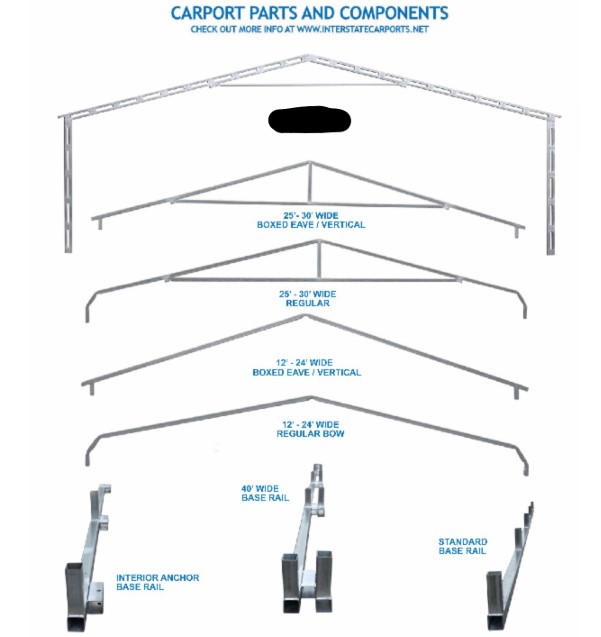
The backbone of a tubular steel building is its main frame, consisting of galvanized, tubular steel members12. These components are typically made from 12-gauge or 14-gauge steel, offering excellent strength and rust resistance3. The frame includes:
- Vertical posts
- Horizontal beams
- Roof trusses or rafters
Purlins and Girts
Purlins run perpendicular to the rafters, supporting the roof panels. Girts are horizontal members that connect the vertical posts and support the wall panels.
Roofing and Siding
Metal Panels
The exterior of tubular steel buildings is typically covered with durable, painted steel panels2. These panels are available in various gauges, with 29-gauge and 26-gauge being common choices3. They provide protection against the elements and contribute to the overall aesthetics of the structure.Trim
Trim pieces are used to finish edges, corners, and transitions between different building components. They enhance the appearance of the structure and provide additional weather protection.
Foundation and Anchoring
Base Rails
Base rails are horizontal members that run along the bottom of the structure, connecting it to the foundation or anchoring system.Anchors
Proper anchoring is crucial for the stability and safety of tubular steel buildings. Anchors secure the structure to the ground or a concrete foundation, ensuring it can withstand wind and other environmental forces.
Doors and Windows
Entry Doors
Steel entry doors are commonly used in tubular steel buildings, providing security and durability.Overhead Doors
For structures like garages and workshops, roll-up or sectional overhead doors are essential components.Windows
Windows can be added to improve natural lighting and ventilation. They are typically framed within the steel structure.
Additional Components
Insulation
Insulation can be added between the framing members and panels to improve energy efficiency and comfort.Ventilation Systems
Proper ventilation is important, especially for larger structures. This may include ridge vents, turbine vents, or powered ventilation systems.Gutters and Downspouts
These components manage rainwater runoff, protecting the foundation and surrounding areas from water damage.
Customization Options
Tubular steel buildings offer numerous customization possibilities:
- Clear span designs for unobstructed interior spaces4
- Lean-to additions for extra storage or covered areas3
- Various roof styles (regular, boxed-eave, vertical)
- Custom sizes and configurations to meet specific needs2
By combining these components, manufacturers can create a wide range of structures, from simple carports to complex barndominiums. The modular nature of tubular steel buildings allows for easy assembly, often without the need for heavy equipment or specialized skills1. This flexibility, combined with the strength and durability of steel, makes these buildings an excellent choice for various applications.
Comments
Steel Building Components — No Comments
HTML tags allowed in your comment: <a href="" title=""> <abbr title=""> <acronym title=""> <b> <blockquote cite=""> <cite> <code> <del datetime=""> <em> <i> <q cite=""> <s> <strike> <strong>